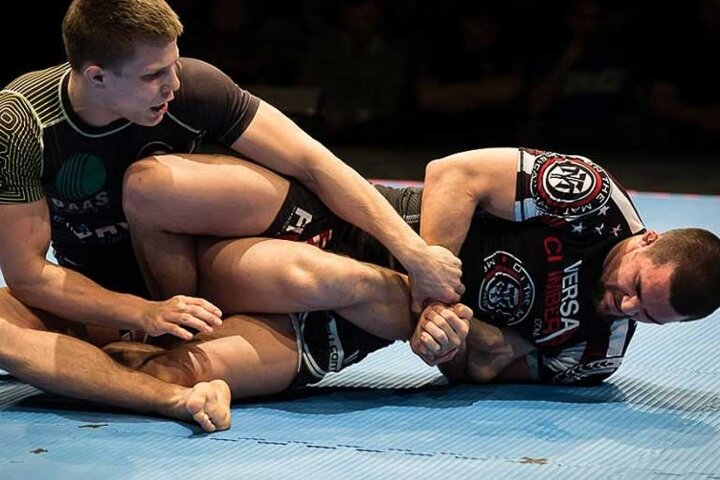
Would you like to become known as the athlete who wins BJJ matches fast, perhaps in the opening seconds? Then your best bet would be to go for a Leg Lock.
More specifically – for the Heel Hook.
John Danaher emphasizes why this is the case:
When it comes to fast submission entries there is an obvious king of the hill. Heel Hooks can clearly be entered into and completed in less time than most other forms of submission.
This is because they do not need to conform to the standard method of positional control as a precursor to most upper body submissions.
He explains that the “fast” upper body submissions variations don’t have gravity on their side:
Upper body submissions that don’t require prior positional domination such as flying arm bar and triangles have the disadvantage of working against gravity in their initial application.
Whereas heel hooks attack the lower half of the body and hence don’t require the difficult act of climbing the body to be applied (made even more difficult when there is no gi to grip).
Per Danaher, history shows that Heel Hooks are the way to go as far as the fast submission wins are considered:
View this post on Instagram
The Leg Lock Anthology: 50/50 by Lachlan Giles.
- Learn the never before seen submission system that shocked the world at The ADCC 2019.
- ADCC Absolute Medalist Lachlan Giles teaches the full leg lock system behind one of grappling’s most legendary performances.