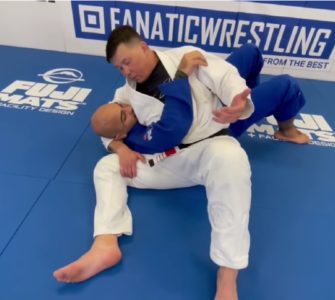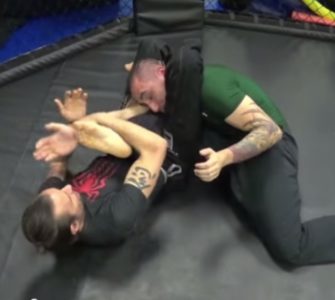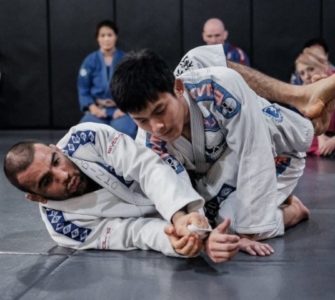
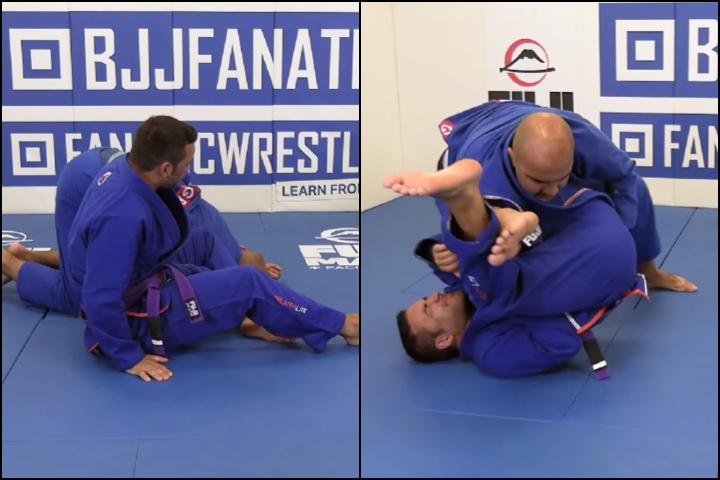
The Omoplata is often one of those elusive submissions. Your opponents see it coming and try to elude getting submitted by either staying extremely tight with their elbows or by “slipping out” once you shoot for it. Now, the second problem has to do with how mobile your hips are, how well (speed and technique) you shoot that leg underneath their shoulder, and how fast you are in feeding their arm to your hip… However, the first problem can actually be easily dealt with.
The Omoplata is a nasty submission which, once you’re caught in it, will be extraordinarily difficult to get out from. Especially if your training partner is someone who has long legs.
However, every problem has a solution… And every submission has an escape.
Here’s how to go about escaping the Omoplata – as explained by the one and only Bernardo Faria:
Stop Getting Tapped Out So Much And Learn The Right Ways To Escape From Grappling’s Most Common Submission Holds – Especially Designed For Older Students Who Want To Find Ways To Beat Their Opponents – With This Series From 5-Time Black Belt World Champion Bernardo Faria.
- Bernardo Faria won 5 black belt IBJJF World Championships using these systems – and now he teaches every detail so it can help you.
- Move from position to position as Bernardo gives you deep insight into how you can rapidly improve this fundamental skill.