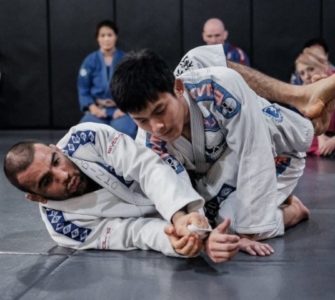
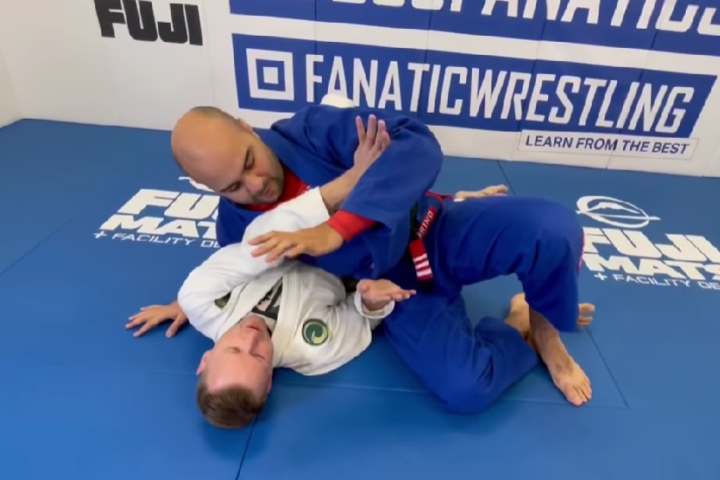
Know that feeling of being crushed in Side Control? Yeah, not a pleasant one. And it gets even less pleasant when your training partner switches to Kesa Gatame – that’s when you really don’t want to stay in this position for any longer than you have to.
However, there are two easy Side Control escape options that will help you a lot in getting out of the Kesa Gatame. Drew Weatherhead demonstrates.
2 EASY SIDE CONTROL ESCAPES
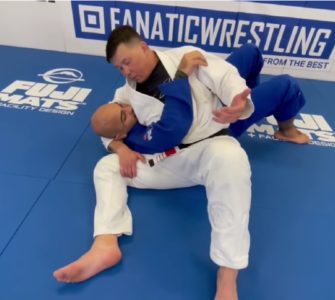
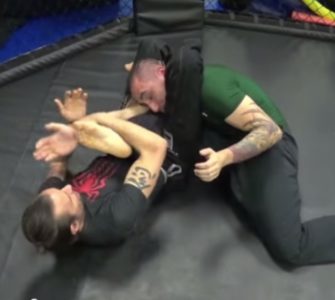
Instructor Weatherhead first emphasizes that, when your training partner starts establishing the Kesa Gatame, you have to use your far arm to post on their biceps. Make sure that you straighten this arm out; if you keep it bent, you’ll get crushed. A straight arm is a strong arm in this case.
Then, pinch your other elbow next to the partner’s hip (arm bent) and get the same side leg’s knee next to their hip as well. From here, it will be rather easy to simply “push” your training partner off of you with your straight arm.
For the second variation of this technique, your training partner won’t give you enough space to lower your second arm’s elbow next to their hip. Doesn’t matter; for as long as you are straight-arming them with your first arm, you’ll be able to turn away from them in a semi-circle. By doing so, your partner will lose their base and you’ll end up in top Side Control/Kesa Gatame yourself.
Watch how to do these 2 easy Side Control Escapes on the video below: