
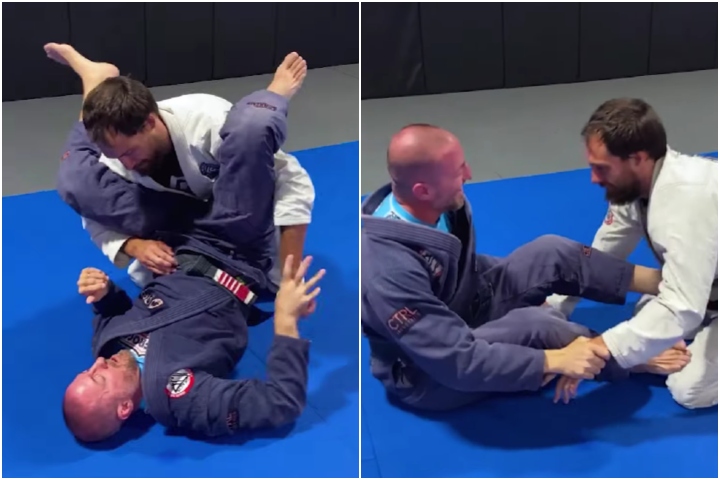
Stack passes are one of the most common types of guard passes in Brazilian Jiu-Jitsu; no doubt that you have a training partner or two who give you trouble with them. And if you don’t know how to defend properly against getting “stacked”… You’re probably going to have a lot of neck stiffness!
Here are a couple of tips on how to defend against the Stack Pass. Even though there are a lot of different variations to it, these pointers will be of great help all around.
If your opponent is passing your guard by using the Stack Pass, then you’ve got to be able to block their “anchor hand”. If you can do that, there’s a high chance you’ll recover your guard.
Adam Miller explains and demonstrates the importance of the anchor hand principle:
No Guard? No Problem! Stop Getting Smashed And Retain Your Guard Effortlessly With The Zero Guard Approached Demonstrated By Fourth Degree Brazilian Jiu Jitsu Black Belt Adam Miller.
- Start with an introduction to the zero guard system and learn why it is that people get smashed in certain positions.
- Go over tons of different philosophies that will be useful in all aspects of your game such as the head and center line principle and the anchor hand principle.
- Utilize the overhook successfully and use it to get to headlock control and start working to various different guards and positions from there.