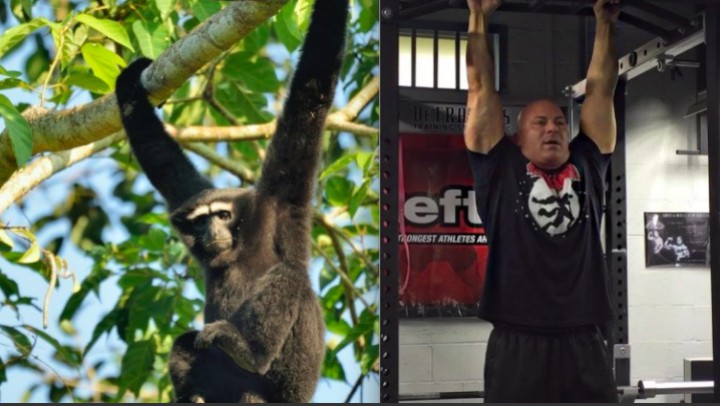
If you suffer from chronic shoulder pain, orthopedic surgeon John M. Kirsch, M.D, has a simple solution: Ape style Dead Hangs.
This exercise can reshape the space in the shoulder, strengthen the shoulder muscles, and reduce pain. It can also erase chronic shoulder pain in as little as 10 days.
You need to be passively hanging:
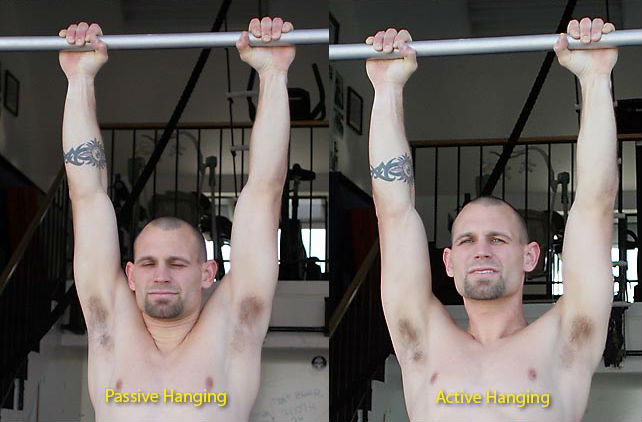
Dr. Kirsch tells Newsmax Health:
“Man is the fifth great ape. The others are the gorilla, chimpanzee, orangutan, and gibbon, all of which still swing from trees or brachiate.
“When we came down from the trees about 30,000 years ago, we stopped brachiating. But we still have the shoulders of an ape that’s supposed to brachiate.Because our shoulders aren’t getting the exercise that nature intended, they eventually weaken and become prone to injury, he says.To treat and prevent such injuries, he has developed a simple protocol that simulates brachiating. It requires two elements: hanging or partial hanging from a pull-up bar and performing light weightlifting with dumbbells. “It cures 99 percent of shoulder pain,” Dr. Kirsch says.If you can’t do a complete hang with your feet off the floor, do a partial hang and keep your feet on a stool or on the floor, and gradually put pressure on the shoulder,”
“Paradoxically, the pain experienced while hanging from a bar will not injure the shoulder, but must be accepted”
See how its done: