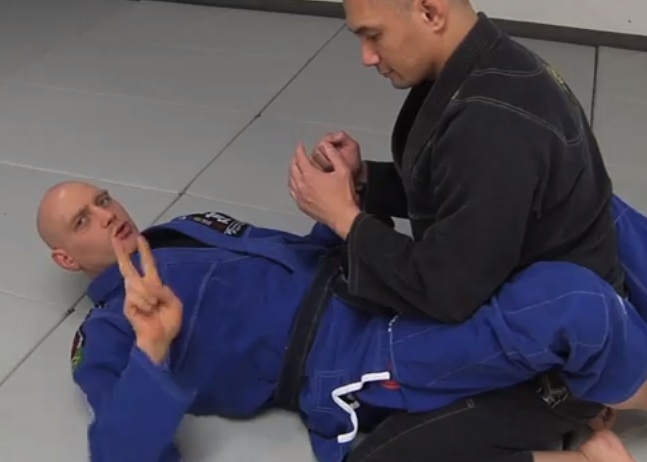
If you’ve been around jiu-jitsu for any length of time, you’ve likely encountered one of the more irritating and often ineffective tactics for breaking the closed guard: the elbow grind. This “technique” involves a top player driving their elbows into the inner thighs of the bottom player, attempting to force the guard to open through discomfort or pain. Though it may sound like a clever “hack” to weaker practitioners, it is widely regarded as inefficient and unlikely to work on experienced grapplers. So, why does it persist, and more importantly, how can you shut it down?
Stephan Kesting of Grapplearts.com breaks down why the elbow grind is a flawed strategy and how to respond effectively. For one, the tactic requires the top player to compromise their posture, relying solely on pain compliance rather than legitimate technique. Pain-based techniques are unreliable, particularly in competitive settings where adrenaline is high and opponents are used to dealing with discomfort. Not to mention, this “grind” approach offers the bottom player a host of opportunities to counterattack and take control of the match.
Why the Elbow Grind Fails
- Lack of Postural Integrity: To grind their elbows effectively, the top player must usually lean forward and concentrate their weight downwards. This weakens their posture and leaves them vulnerable to attacks and sweeps.
- Reliance on Pain: Techniques that depend on pain to achieve results are fundamentally weak when faced with opponents who have higher pain tolerance, tight grips, or those who simply know how to defend effectively.
- Minimal Leverage for Guard Opening: Unlike leverage-based guard breaks, grinding elbows into the thighs does nothing to address the structure and mechanics of the closed guard. It wastes time and opens the attacker to counters.
How to Defend and Counter the Elbow Grind
Kesting demonstrates a straightforward yet highly effective method to neutralize this tactic. Here’s a summary of what you need to do:
- Clamp Your Knees Together: When you feel your opponent’s elbows starting to dig in, immediately clamp your knees together. This shifts the tension away from the muscles being pressured, nullifying their discomfort-based approach.
- Adjust Your Angle: Use your hips to shift slightly off-center, creating angles that disrupt their focus and make it difficult for them to maintain consistent pressure with their elbows.
- Hand Control: Secure control of their sleeves or wrists. This not only prevents them from continuing to grind their elbows but also opens up opportunities to initiate sweeps, submissions, or transitions.
- Attack Opportunistically: With their posture compromised, you can now transition to attacks such as arm drags, kimuras, triangles, or sweeps. The more they lean into the grind, the easier it becomes to exploit their position.
Beyond the Technique: The Philosophy
Dealing with the elbow grind guard break is not just about defending a single, ineffective tactic. It’s a reminder of the larger philosophy in grappling: efficiency, leverage, and control are king. Pain-based, brute-force strategies often fail against skilled opponents because they rely on temporary effects rather than true, skill-based manipulation of body mechanics.
If you find yourself on either end of this interaction—whether defending against it or mistakenly relying on it as a guard break—it’s a learning opportunity. The key takeaway is to strive for techniques rooted in solid mechanics, positioning, and leverage rather than relying on discomfort alone. Defending the elbow grind offers a practical case study in how to turn a poor technique into an advantageous position for yourself.
So, next time someone tries to break your guard with the elbow grind, remember: clamp, angle, control, and attack. In the end, it’s a tactic that only exposes them, and you can use that exposure to your advantage, every time.
Sloth Jiu-Jitsu: The Ultimate Guide for Calmly Beating Bigger, Younger Opponents
💥 What if slowing down was the fastest way to win?
💭 Tired of Getting Smashed by Younger, Stronger Grapplers?
It’s not your age. It’s your strategy.
If you’re a passionate grappler over 35 who’s sick of getting outpaced, outmuscled, or out-cardio’d by opponents half your age — this 120 page e-book was made for you.
🔓 Unlock the Power of Sloth Jiu-Jitsu:
Build Sustainable Strength—Without Wrecking Your Joints, Energy, or Jiu-Jitsu
Tired of waking up sore and burnt out after lifting? Sloth Strength is a proven blueprint for grapplers over 35 who want to get stronger—without the pain, burnout, or injuries.
Developed from 25 years on the mats, this no-burnout approach is made specifically for BJJ athletes in their 30s, 40s, and beyond.