
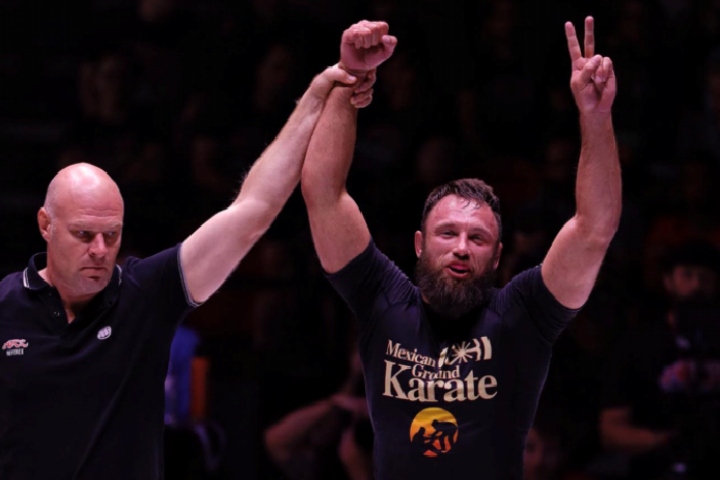
In a recent conversation on The Jaxxon Podcast, hosted by MMA legend Quinton “Rampage” Jackson, Craig Jones opened up about the financial landscape of competitive grappling.
The discussion, filled with humor and insights, also went into the comparison between the earnings in mixed martial arts and Brazilian Jiu-Jitsu.
Jones was straightforward when discussing the potential for submission grappling to rival MMA in terms of financial rewards…
Specifically, he expressed skepticism about grappling matches ever matching the financial scale of MMA:
As much money (as in mixed martial arts)?
I don’t think so. No.
He further elaborated that even the most prestigious grappling promotions, which organize only a couple of events annually, do not offer payouts that could compete with those in MMA:
I don’t know what the other guys get paid, but I imagine there’s not a huge purse going around for a lot of these guys.
In other words, Jones was emphasizing the need for athletes to find alternative revenue streams.
But how does he, himself, earn his income?
It’s all about selling seminars and instructionals, actually:
In terms of being a real revenue stream, I have to do other things.
That (instructionals and seminars) would be the biggest source of revenue.I just do a 90/10 split.
But most of the time, I’m just too lazy to do the seminars.