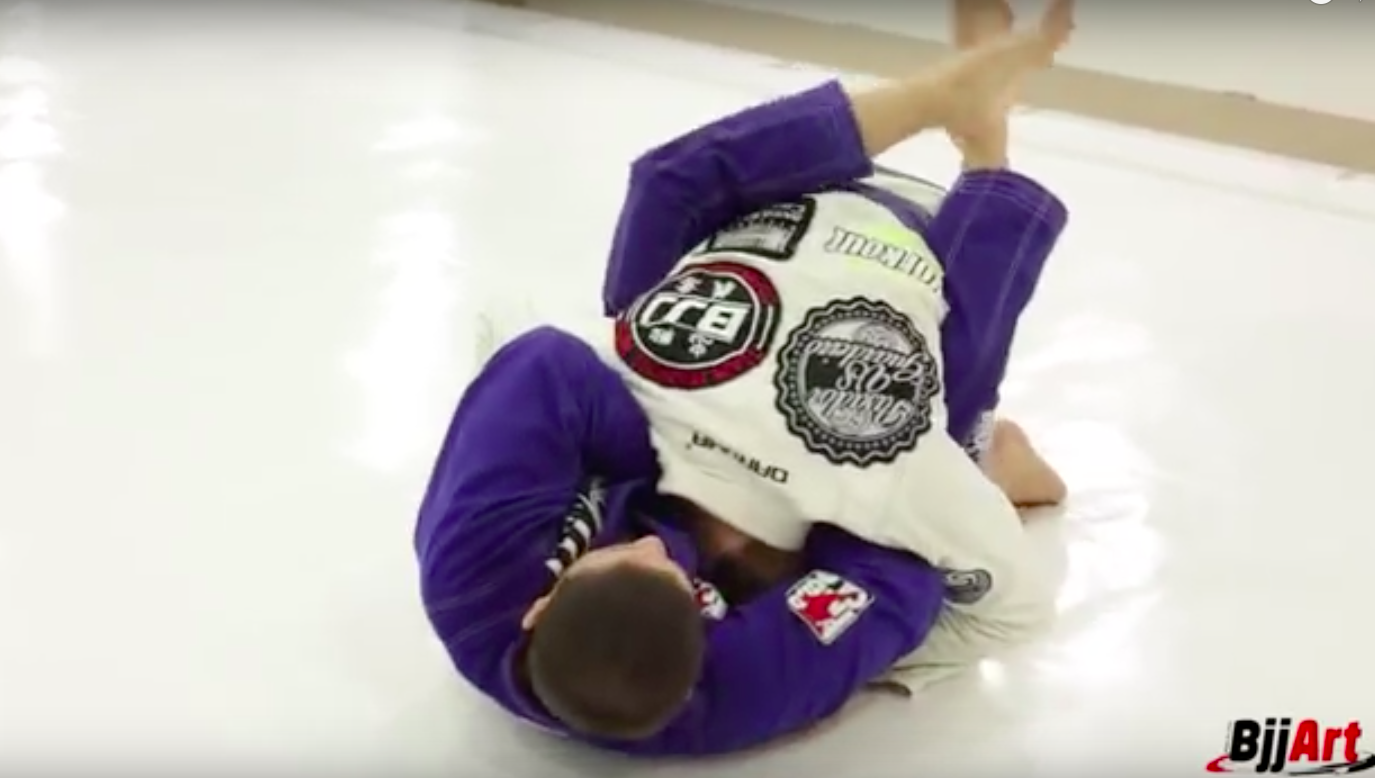
The Guillotine choke remains one of the most versatile and widely-used submissions in both Gi and No-Gi Brazilian Jiu-Jitsu. As one of the first submissions many grapplers learn, it’s simple yet powerful, boasting an array of variations that keep it relevant even at the highest levels. From adjustments in hand positioning to grip variations, each adaptation offers a unique approach to executing the choke. Some practitioners lean toward the arm-in Guillotine, while others favor the high elbow variation, often called the “Marcelotine,” named after Marcelo Garcia, who popularized this version.
In a recent seminar in Porto, Portugal, 2015 ADCC and IBJJF World Champion Claudio Calasans shared his favorite setups for the Guillotine choke specifically adapted for the Gi. While many consider the Guillotine more challenging in the Gi due to the opponent’s collar interfering with positioning, Calasans has refined techniques that maintain the Guillotine’s potency even with this added complexity. His approach offers subtle details that make the choke just as effective in the Gi as in No-Gi.
Attendees at the seminar gained insights into these precise adjustments, learning firsthand how Calasans combines grip control and strategic setup to bypass common obstacles posed by the Gi. His techniques are invaluable for any BJJ practitioner looking to master the Guillotine in both training and competition settings.
This was during his seminar in Porto, Portugal.
Sloth Jiu-Jitsu: The Ultimate Guide for Calmly Beating Bigger, Younger Opponents
💥 What if slowing down was the fastest way to win?
💭 Tired of Getting Smashed by Younger, Stronger Grapplers?
It’s not your age. It’s your strategy.
If you’re a passionate grappler over 35 who’s sick of getting outpaced, outmuscled, or out-cardio’d by opponents half your age — this 120 page e-book was made for you.
🔓 Unlock the Power of Sloth Jiu-Jitsu:
Build Sustainable Strength—Without Wrecking Your Joints, Energy, or Jiu-Jitsu
Tired of waking up sore and burnt out after lifting? Sloth Strength is a proven blueprint for grapplers over 35 who want to get stronger—without the pain, burnout, or injuries.
Developed from 25 years on the mats, this no-burnout approach is made specifically for BJJ athletes in their 30s, 40s, and beyond.