If you’ve ever been injured in BJJ, you know how frustrating it can be – because it inhibits your ability to train properly.
However, something strange happens sometimes as a result of that frustration. Even though the practitioner could keep training, albeit with some limitations, they stop training altogether.
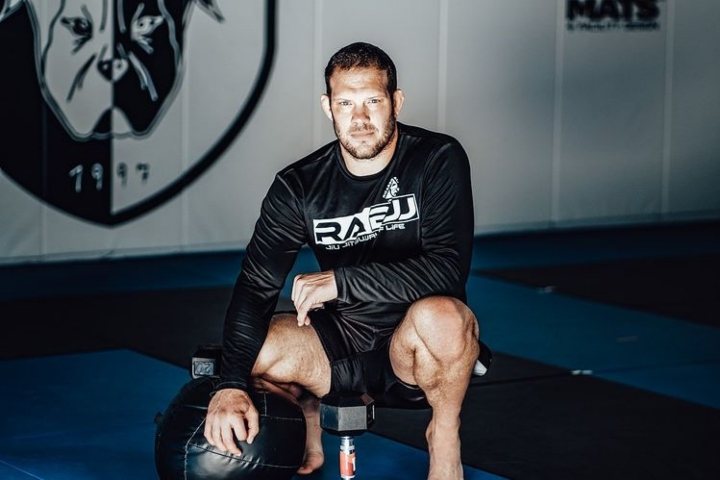
You shouldn’t allow this to happen to you. Instead, as emphasized by Ricardo Almeida, you should try to work around the injury:
You know, sometimes when we get injured doing Jiu-Jitsu and then we can’t do Jiu-Jitsu because of the injury, we start going crazy. But you could still do other things.
If it is an upper body injury, you can get on a bike, on an elliptical, you could do some pool work. If it is a lower body injury, depending on how bad the injury is, you can still ride the bike softly perhaps. Or you can go swimming.
Whatever it is, just find a way to work around it and improve the process of healing of the injury.
Essentially, it’s a “do something” principle. And it will aid your recovery too, as Almeida points out:
Instead of just resting and doing nothing, that movement of any kind will get your blood flow moving, which will aid your recovery.
Plus, there’s the positive energy that you get from moving your body.
View this post on Instagram
Make sure to read the rest of our interview with Ricardo Almeida on the following link.