Khabib Nurmagomedov is well-known for the level of discipline he has followed, throughout all the years of fighting professionally… And that he continues to follow, even as he’s retired.
However, he didn’t stop at self-discipline either. He also tries to instill the same level of discipline in the students at his gym, the level that would rival even his own.
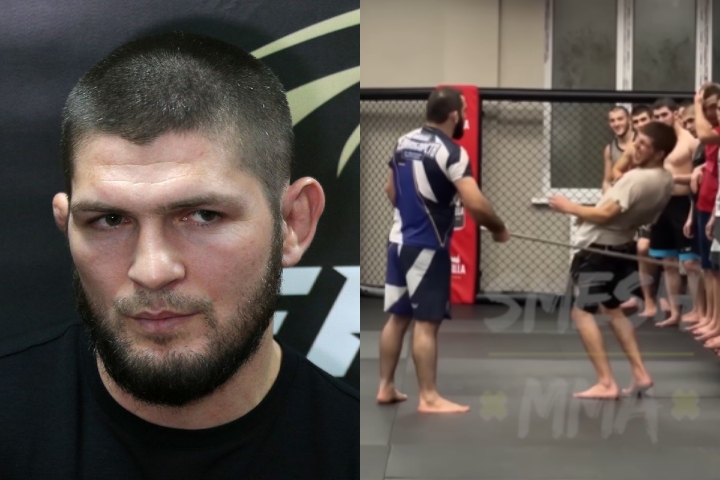
For example, a recently surfaced footage shows fighters who train at Khabib’s gym being “punished” for breaking a haircut rule!
On the video below it can be seen that a coach has been inspecting the haircut of his students. And it seems that anyone whose hair was “too long” was smacked with a long stick.
The video was published by SmeshMMA:
But why is this rule in place?
One of the theories is that Khabib’s late father, Abdulmanap Nurmagomedov, used to get mad if his students had long hair. Reason being that long hair can direct sweat into their eyes and blur their vision; thus making a big impact on the outcome of the fight.
Be it as it may be, if you want to train in Khabib’s gym, it seems that you’ll have to follow a strict rule of conduct. Which, after all, is one of the things that made Khabib into a champion:
If you come here, don’t complain. You’re trying to become best, you’re trying to become a champion… And now you want to say that you’re tired?
Who cares if you’re tired or not. Nobody care about you.