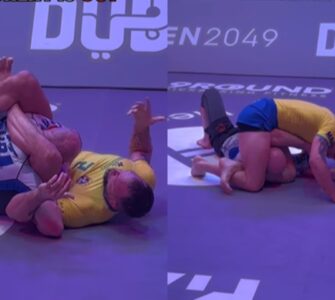

There have been some rumors that Kade Ruotolo and Tommy Langaker were involved in a heated exchange of words, during an ADCC afterparty.
And it’s now been confirmed that, indeed, the two did “face off” against each other.
Kade Ruotolo explained what happened, in a recent interview with ONE Championship:
At the ADCC afterparty, it was getting a little crazy.
[Langaker] came up to me and he was, like: “When are we going to fight?’ We exchanged some words.
And then, long story short, I just body-locked him, and I picked him up in the air.
It was all good in the long run, even though it did create some tension between the two athletes:
I was, like: “I could slam you right now. You’re lucky I won’t.”
I told him: “I promise you, when I fight you, I’m going to submit you.” So now I’ve got to submit him.It was pretty funny. We messaged each other afterward. It was all good, but it just kind of created a little bit of tension.
And yes, that tension comes as a welcome surprise to Kade:
I think having an opponent that you have a little bit of tension with just excites me more than anything.
I just want to submit him really bad.
From the second I step foot in there, I’m going to be very, very physical until I get that submission.
Kade Ruotolo will be competing against Tommy Langaker on June 9, defending his ONE lightweight submission grappling world title.
View this post on Instagram