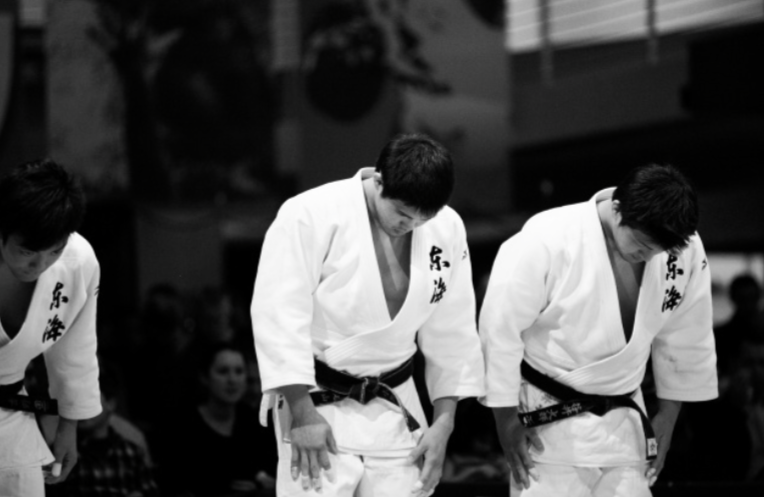
Written by Brandon Hetzler who is Gracie Jiu-Jitsu black bet under Rickson & Kron Gracie, 7th degree black belt in Jugoshin Ryu JuJutsu.
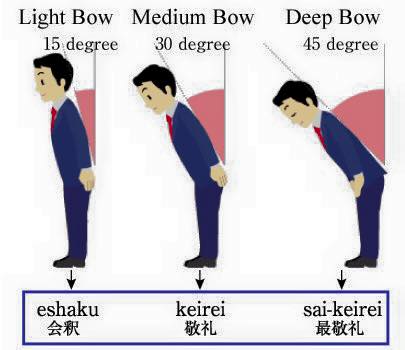
I would like to share a little something on bowing in Japan. This post will only cover the standing bow. I have seen many foreigners and especially traditional Japanese martial artists who take bowing to the extreme, Mainly the deep bow. I feel like most foreigners use only the deep bow because they may not know the other ways that are used more on a daily basis in Japan. Bows are almost always used during greetings. One must remember, there are various bows for various occasions and these are delivered in the ways that follow:
1. The deep bow: about 45 degree angle
This bow is done when meeting with someone who is older than yourself or someone you may consider more experienced or wise – a sensei, a doctor, a lawyer, etc. Japanese business men also use this form of bow when business deals have been reached with another company or person – projecting respect and thanks rolled into one. This particular bow does not, in any way, show that you are groveling or acting gratuitously. It is, as the name suggests, “deep” thanks. The “deep bow” is also used with an apology and indicates true remorse.
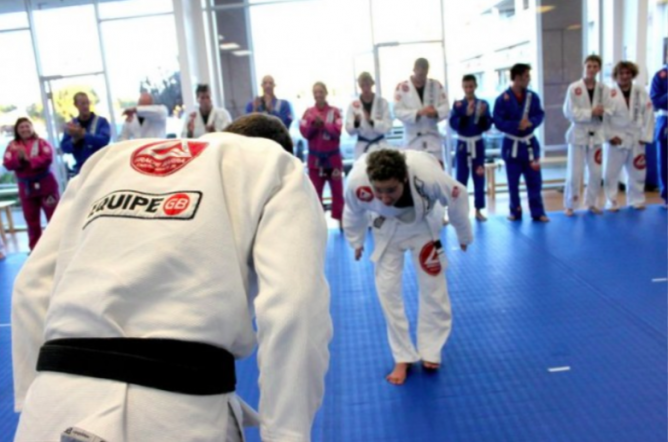
2. The Medium bow: usually around 30 degree angle
This bow is performed many times per day. It is an action done so much, one often doesn’t remember doing it. The medium bow is the same as saying, “Thank you”, when a store keeper serves you. You should bow to the subway station man, after he’s explained, for the umpteenth time, how to get to the nearest department store. You should bow when you are offer something, a seat, a drink, etc.
3. The light bow: 15 degree angle
This is done among friends and is best described as saying “thanks”. It, along with the medium bow, is used daily in many situations. At a bar, after receiving your drink, a slight nod tells the bartender, thanks. It is a small gesture and I believe some of us in the west, do a similar movement of the head, when we want to convey our gratitude.
Jugoshin Ryu Jujutsu