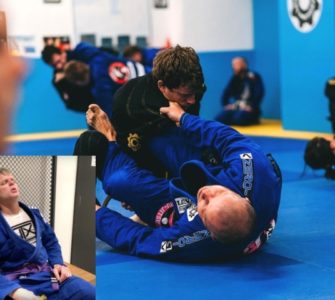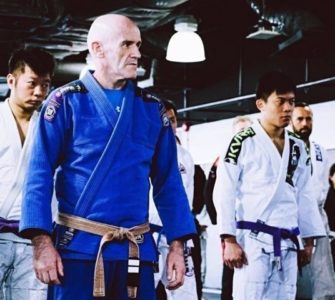
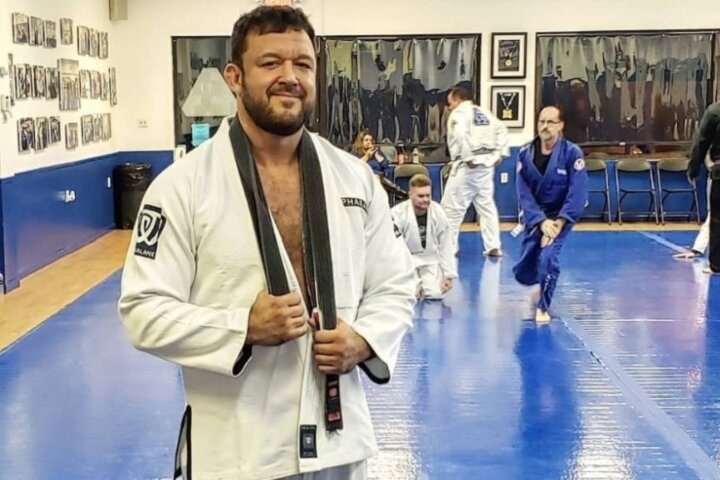
When you train and when you fall in love with Brazilian Jiu-Jitsu, you want to spend as much time on the mats as possible, right? And you want to give it your best every single time, pushing yourself to the absolute limits.
However, this isn’t the best long term decision. For, if you keep training at 100% all the time, it’s just a matter of when you’ll get injured…
And how that will affect the rest of your life.
Tom DeBlass has made that mistake and he admits that it’s one of the biggest regrets of his life as a BJJ athlete:
One of my biggest regrets as a BJJ athlete, [I] was training at 100%, 6 days a week. For over 10 years straight I went hard, 6 days a week, two times a day.
This is not the way. Now I need two shoulder replacements and I’m plagued with many other injuries.
So, he recommends students a different approach to training:
Train smarter, not harder. I’m thankful I learned this lesson however, now I am a better teacher because of it.
Take a break everyone. Have fun, flow roll, relax, laugh. Enjoy the moments.
Lastly, DeBlass also asks for students to find a coach that knows what he’s talking about:
Please find a coach that understands this. Take it easy. Hard training is absolutely essential, but not everyday.
View this post on Instagram