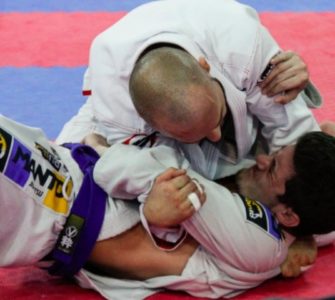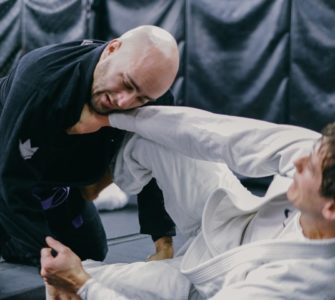
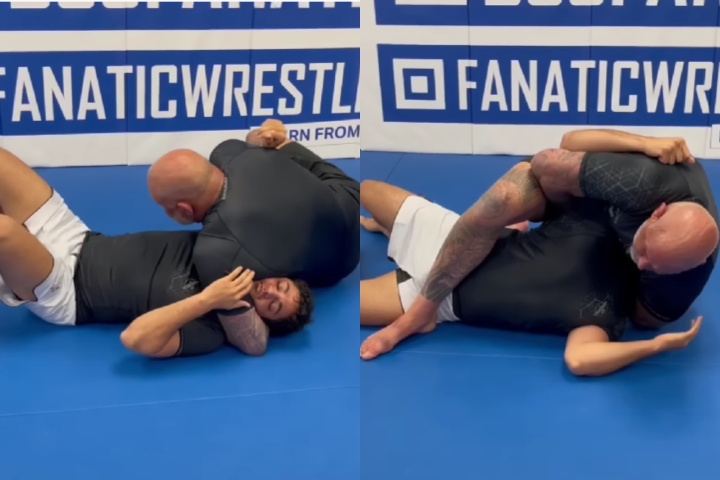
“The Dragon Sleeper”… Even the name sounds scary. And, well, the technique is scarier than its name is; it’s a neck crank submission that has its roots in catch wrestling – and it’s arguably the most dangerous submission you could conceive of.
Here’s how to do it, as explained by Neil Melanson. Just be careful when executing it, so that you don’t (seriously) injure your training partners.
THE DRAGON SLEEPER SUBMISSION TECHNIQUE
To set up the Dragon Sleeper technique, you’ll start from the classic North-South Head & Arm Choke. Melanson emphasizes that you should move yourself a bit to the opposite side of the choking hand, so that you aren’t in-line with your training partner.
From there, you need to pull the partner’s head up and into you a bit, while simultaneously switching your hips away from them. Then, bring your near leg close to them, so that your knee plants across their ribcage; while, at the same time, pulling their head and neck into your lats.
All that is left to do from here is to step over your training partner (with your far leg) and pull them towards you to get the tap. Just, please… Please be careful when drilling this technique.
And, unless you are absolutely, 100% sure in your skill and that your training partner won’t spaz out, don’t try go for this submission during live rolling.