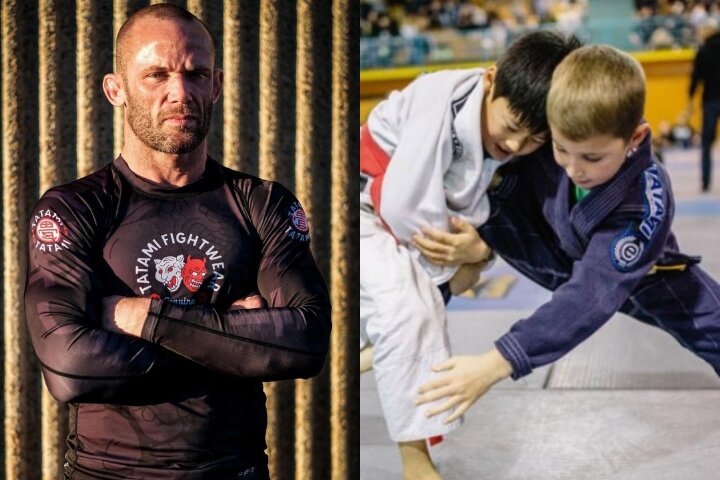
Professional BJJ competitors often have to cut weight in order to make their fights happen… But what’s the case with kids and teenagers who do the same?
Should they be cutting weight? Or just compete in their natural weight classes?
Josh Hinger believes that kids and teens should not be dropping weight classes. Here’s why:
One thing that I hope that the whole Jiu-Jitsu community would get behind is that kids, teens, juvenile competitors absolutely should not be cutting weight for their competitions.
Obviously, this is irresponsible, I feel like that there’s a lot of coaches and parents out there that do pressure them to cut weight.
I think that, if you’re losing the match because of a few pounds – the problem is not the size, the problem is Jiu-Jitsu.
They just need to have better Jiu-Jitsu.
For, the idea of Jiu-Jitsu is that a smaller person can beat a slightly bigger person without too much trouble.
Hinger continues:
Obviously, if we’re talking 20-30 pounds, it’s a different situation.
But, to sacrifice a child’s health and development, their wellbeing – so that they can win a cheap gold medal at a tournament that means absolutely nothing in the grand scheme of things…
To me, that is absolutely ridiculous.
View this post on Instagram