Everybody was strategizing hard before the Olympics. And newaza was a huge factor playing into all that. Just check out the report Dr. Rhadi Ferguson and Christopher Round wrote for Kayla Harrison comparing aspects of her game (including newaza) to those of her potential opponents.
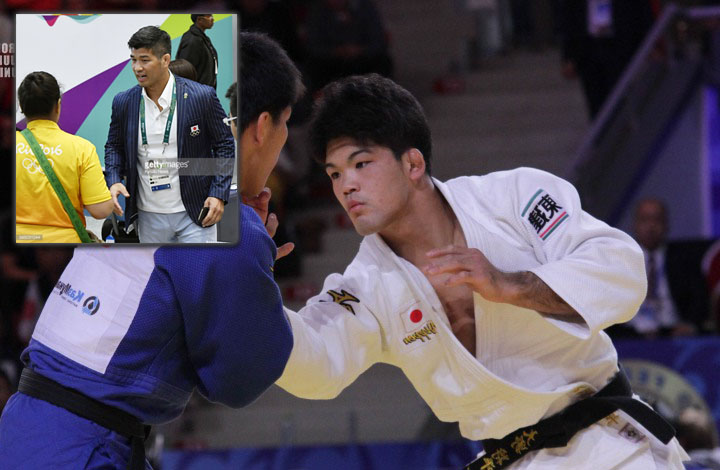
Now the Japanese Olympic Judo coach and legendary player Kosei Inoue talked about the strategy applied for the Teddy Riner finale and more.
Coach Inoue was aware of the players his teammates might encounter and directed them toward Conscious development. One might ask what is the point of it and to this question Kosei Inoue answered to a Japanese website nhk.or.jp:
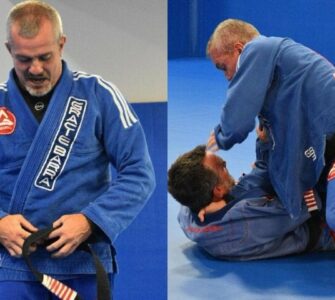
“In order to respond to the new judo incorporating ethnic martial arts around the world, we had adopted the practice to cultivate the ability to respond to a variety of martial arts such as performing a training camp of Okinawa sumo and Brazilian jiu-jitsu. In addition, the staff was invited to specialize in sports medicine, I had been honed by working the body making sure that there are no loses to foreign players over the Japanese traditional “be-all and end-all judo” approach.
While responding to a new judo, philosophy of coach Inoue many believed their judo will lead to victory and it was felt throughout the interviews.”
One of the goals was to overthrow the world’s strongest man – Teddy Riner. However the Japan selection fell short of that goal but cross training more than paid off. Japan won 12 medals at Rio in Judo, 3 gold ones, 1 silver and 8 bronze. This is the largest number of judo medals Japan has won at a single Olympics.
Japan’s dominance wavered during the London Olympic games – at that point the Japan’s men failed to win a gold medal in any weight division. After that Kosei Inoue took over the coaching position with a lot of bravado:
“No matter what you do, whether it’s your daily job or (athletic) competitions, you carry pressure on your shoulders. I think it’s the same for everyone else,” Inoue said in an exclusive interview with The Japan Times at his office at Tokai University, where he serves as an associate professor at the Department of Physical Education.
“For me, it’s a position with the Japanese national team, but whether it’s heavy pressure, struggle or pleasure, I’ve made up my mind to deal with it.”
Kosei didn’t mince words:
“Various factors contributed to our losses,” he said. “You can roughly divide them into mental, technical and physical matters. But you can’t pinpoint one particular reason.”
“The world is progressing fast. You’ve got to be aware of it,” Inoue said. “Japan’s judo has been trying to do things its own way, as if Japan was the be-all and end-all of everything.”
“Judo, when we refer to it in Chinese characters, that’s what started in Japan,” Inoue said. “But when it’s written as j-u-d-o, in English, it’s a complex sport that derives from other martial arts. For instance, it’s sambo in Russia, and Brazilian jiu-jitsu in Brazil. So it’s complex judo versus our judo.”