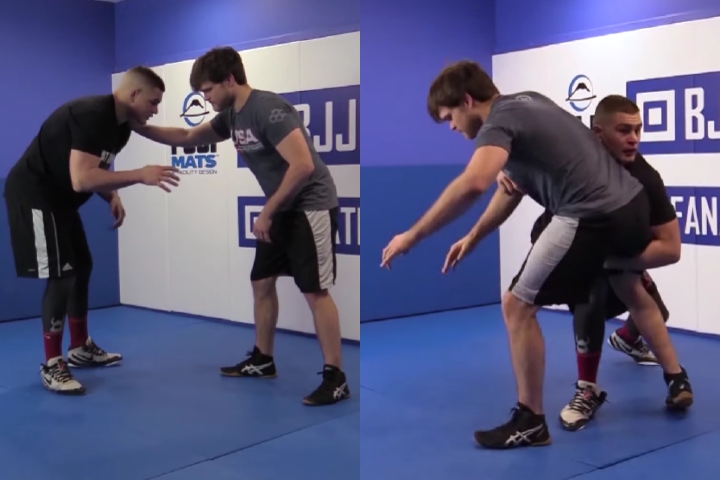
Are you an Armdrag fan? Or are you someone who simply wants to learn how to do it and then Single or Double-Leg your opponents into oblivion? That’s great, because a successfully applied Armdrag can be a fantastic setup for many takedown variations.
However, you first have to learn some details on how to go about this technique. Here are a couple of great tips from Pat Downey, with an addition of a different Armdrag variation – the “Slapdrag”.
ARMDRAG DETAILS BY PAT DOWNEY
To get it going with the setup, Downey approaches his opponent head-first. Most of the athletes won’t just let you close in on them like so, however, so they’ll post on your shoulder (make sure to keep your elbows tight to your body). So, once they post on your shoulder, you need to “slap” their hand down. As you do it, grip their arm with your other hand, deep into their armpit.
This variation is much easier to do than a regular Armdrag setup, where you grip the opponent’s arm with your first hand immediately. It will take them much more by surprise.
Here’s an important detail: as you drag their arm across, you also need to step into them at the same time. This makes more sense than stepping to the outside, as it keeps you closer to your opponent and in a better position to go for a takedown or a throw.
Watch Pat Downey explain this Armdrag setup in more details on the video below: