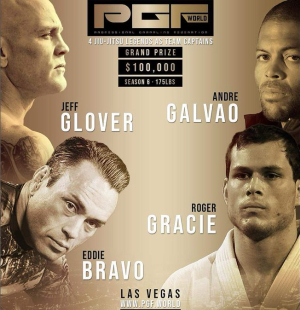
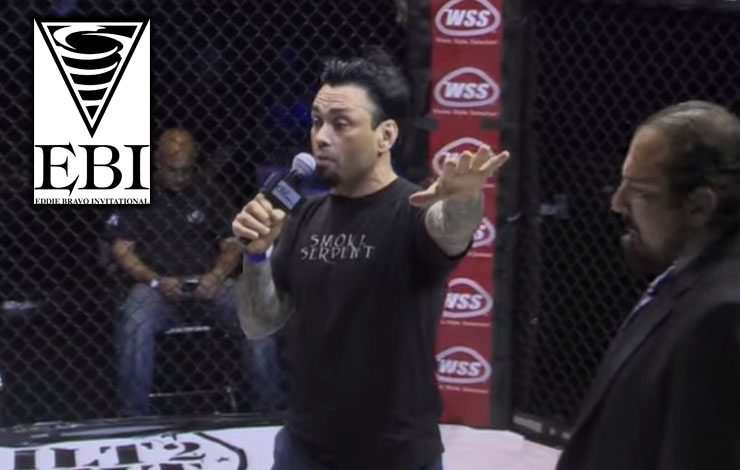
Eddie Bravo has long inspired to create a style of jiu-jitsu that’s dangerous from the back but would withstand tests in MMA surrounding.
This idea has been in his mind as far back as 1999 when Eddie as a purple belt started creating what we now refer to as the rubber guard as a type of guard more functional in MMA or NoGi surroundings.
In 2012 there was an attempt to create a Combat Jiu-Jitsu competition but it didn’t have much success. Here’s the first fight with this type of ruleset:
And now he’s announced that he’s looking to incorporate strikes in his competitions in 2017. He announced the big transition on his instagram and went on to further discuss it.
Here’s an excerpt from his interview with BJPENN.com radio:
I’m going to finish what I started with combat jiu-jitsu. We’re going to be EBI Combat Jiu-Jitsu. Imagine EBI just the way it is: 16-man jiu-jitsu tournament, same stage, everything looking the same, same 10-minute rounds with the overtimes – except when the competitors are on the ground, open palm strikes, old Pancrase style to open up the submissions, to increase the submissions even more. No punches, no MMA gloves . . . no elbows, no kicks . . . we’re going to have that in 2017.
You can listen to the entire Interview at BJJPENN.com Radio