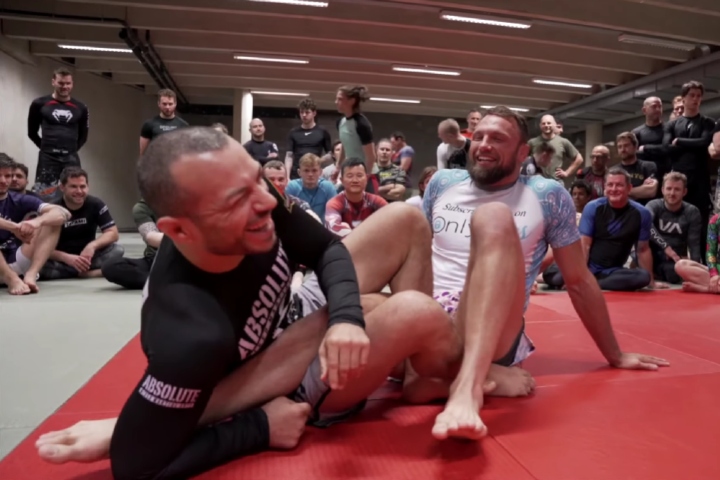
Ah, the Heel Hook… Every submission grappler’s dream and nightmare at the same time – it just depends whether you’re on the giving or the receiving end of it. However, if your Heel Hook defense is good, you won’t have to worry about this submission at all! Rather, you’ll be able to enjoy the Leg Lock game in its entirety.
If you’re up for that, take the following advice from Craig Jones. He knows a trick or two about Heel Hooks.
HEEL HOOK DEFENSE CONCEPTS BY CRAIG JONES
Craig emphasizes that, first and foremost, you must not defend against Heel Hooks as you’d defend against a Straight Ankle Lock. That is, you must not flex your foot upwards. Also, you must not turn into your opponent.
By doing either (or both) of these things, you’ll expose your heel even further and make yourself much more vulnerable to attacks.
Instead, what you should do is hide your heel. To do this, first you’ll turn away from your opponent and aim to place the inside of your foot on top of the mats. Then, as the opponent starts to follow you, you’ll start turning the top of your foot towards the mats.
Follow through with this same exact motion as many times as necessary to finally clear the knee line – and to pull your leg out into safety.
Craig Jones explains and demonstrates these Heel Hook defense concepts on the video below: